
Introduction
Have you ever watched a line of welders and wondered if the fumes they make are quietly shaping the shop’s future? In automotive manufacturing welding fume extraction, tiny particles and gases are not just a nuisance; they are measurable risks (workers cough, production slows). I have seen plants report exposure readings that cross safe limits—sometimes by two to three times—yet managers tell me they thought the problem was “under control.” So, what exactly is missing? Allow me to set a simple scene: a busy body shop, four MIG stations, one central extractor, and a supervisor juggling maintenance logs. The data? Thirty percent of local capture tests fail to meet capture velocity standards. The question then follows naturally: can smarter capture and system design truly lower those numbers and protect staff—with sane cost and upkeep? I will outline the gap I see, explain why many fixes fall short, and point to practical ways forward. Let us move to a closer look at where standard approaches break down—then we can ask how to do better.
Why Traditional Systems Miss the Mark
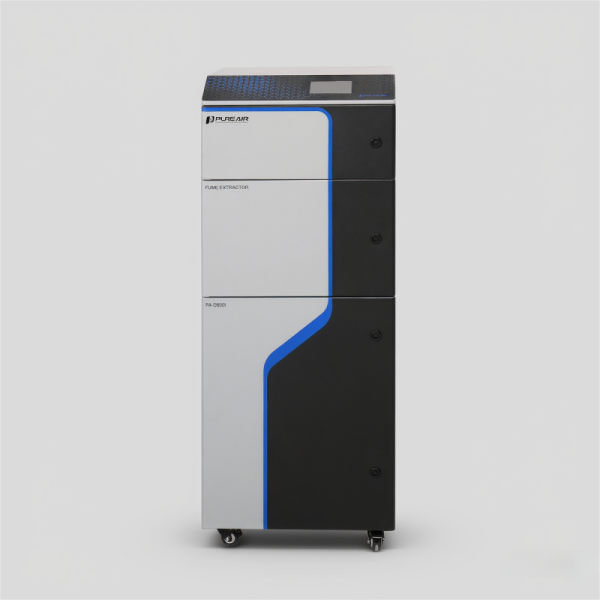
weld fume extraction has been treated as an add-on. We tend to bolt a fan and duct to the shop and call it done. In practice, that leaves big blind spots. First, rigid hoods and fixed ductwork do not follow the worker or the weld path. Capture hoods often sit too far, reducing capture efficiency. Second, system design often ignores variable heat and airflow from welding booths, causing recirculation zones. I have measured eddies near downdraft tables that trap particles for minutes. Technical parts matter too: filters and filtration cartridges get loaded unevenly when airflow is not balanced. Power converters and motor control mismatches also reduce suction when multiple stations run. Look, it’s simpler than you think—if you map real operator movement first, many failures vanish.
In short, the usual fixes miss human behavior and dynamic air patterns. Local extraction units can fail because they were sized for ideal conditions, not real shifts. Edge computing nodes and sensors are rarely used to tune performance in real time. That omission leads to wasted energy and missed capture. We must stop treating extraction as static. Instead, we should design for motion, variability, and maintenance realities. The next part will show which new principles and examples can close this gap.
New Principles and Practical Steps Forward
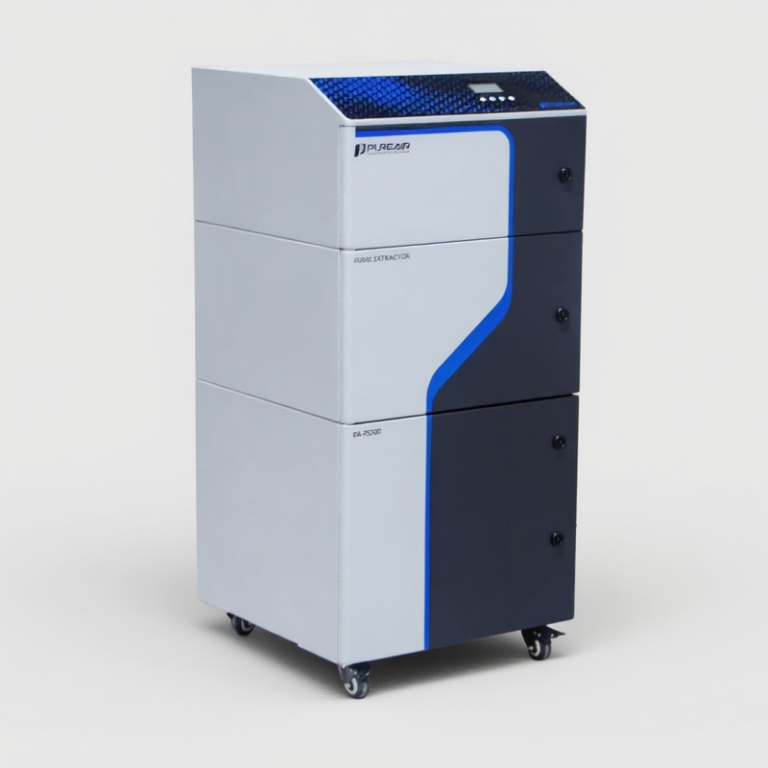
What’s next for weld fume extraction? (Short answer: smarter capture and better feedback.) I have watched pilots combine portable local hoods with sensor feedback and seen exposure drop markedly. When you pair adjustable capture hoods with real-time airflow meters and edge computing nodes, the system adapts to different welds and operators. That means less guesswork. We also see benefits from modular filtration units that allow staged filtration—pre-filter, HEPA, and active charcoal—so filters last longer and remove a wider range of contaminants. In my view, this layered approach wins: it reduces particle load at the point of weld and eases maintenance downstream.
Practically, evaluate systems on three clear metrics: capture efficiency at the weld (tested in real tasks), system responsiveness (how fast sensors and controls react), and life-cycle cost (filters, motors, and downtime). I recommend running short live tests with workers and measuring local air at breathing zones. Also, pay attention to ease of filter replacement and availability of spare parts—those hidden costs matter. — funny how that works, right? Choosing wisely cuts exposure and saves money over time.
Three Metrics to Guide Your Choice
1) Capture Efficiency: Measured at the operator’s breathing zone during real welds. 2) Dynamic Control: Presence of sensors and the ability to adjust suction automatically. 3) Maintainability: Filter access, spare part commonality, and simple motor controllers (power converters that match the load). When I help plants pick systems, we score each option by these three. It clarifies trade-offs fast.
Overall, I believe a shift toward adaptive, worker-focused design will make the biggest difference. We should respect both the human rhythms on the floor and the physics of airflow. If you want a pragmatic partner to test options or run a site trial, I recommend starting with measured trials and transparent metrics. For reliable solutions and trusted equipment, consider contacting PURE-AIR—they offer systems that align with these principles, and yes, we have recommended their kits in several successful pilots.