
Problem first: why THD spikes at low load break systems
Think of your power-conversion chain like a body in training — when it’s fresh and light it can be unstable if the fundamentals aren’t locked in. Low-load conditions often magnify total harmonic distortion (THD), triggering misreads, protection trips, and bad performance for energy storage arrays. That’s where smart hardware matters: energy storage inverter manufacturers design the guts of the system to keep harmonics under control even when the load drops to 10–20% of rated power.
Root causes you can fix with hardware tweaks
THD at low load usually comes from a few mechanical and control issues: switching dead-time, low modulation index driving poor pulse shapes, control-loop gain shifts, and EMI filter resonance. Each one behaves like a weak core muscle — ignore it and the whole system falters. Fix the switching geometry, tune the modulation scheme, and damping gets you back to steady form.
Hardware patterns that win — concrete moves
Attack the problem with structural hardware choices that are proven in field deployments. Multi-level inverter topologies reduce voltage steps and harmonic content. Synchronous rectification and optimized dead-time compensation maintain waveform fidelity at light loads. Add small passive damping networks across L–C filter stages to tame resonance. Use adaptive modulation that raises effective switching linearity as load falls — that keeps THD down without wasting switching headroom. These are not theory drills; they’re practical lifts you can integrate on the production line.
Compliance and testing — CE details that actually matter
Meeting CE requirements is more than a label. For electromagnetic compatibility, the EMC Directive (2014/30/EU) requires immunity testing per EN 61000‑4‑3: radiated RF immunity with a 10 V/m field strength sweep across 80 MHz–1 GHz, and conducted immunity per EN 61000‑4‑6 using 3 Vrms on relevant ports. Emissions must be validated against EN 61000‑6‑3 with conducted and radiated measurements defined in clauses 4.2–4.5. For safety, Low Voltage Directive checks rely on EN 62109‑1 sub-tests such as dielectric strength and temperature-rise verification in clause 7.6. Manufacturers pursuing ce certification energy storage inverter manufacturers must embed these tests in design validation rather than leaving them as an afterthought.
Common mistakes and bench checks
Teams often skip targeted low-load runs. Don’t. Run THD sweeps at 10%, 20%, and 50% load. Measure harmonics across switching frequency and its near-range aliases. Verify loop stability margins under those points and inspect the EMI filter Q factor — a high Q hides a resonance that bites at light load. Calibrate dead-time compensation in hardware, not just in firmware — digital tweaks without matching gate-driver capability leave gaps. And keep component derating sensible; capacitors and inductors behave differently when the duty cycle narrows.
Practical implementation checklist
– Validate multi-level or quasi-resonant topologies early in prototype runs. – Include a small damping resistor or snubber in filter design to kill resonance. – Use adaptive PWM strategies that shift carrier or duty patterns as load changes. These moves are fast to test and give large returns in THD reduction.
Three golden rules and final push
Metric 1: THD target under 3% at 20% rated load measured per IEC harmonic analysis method. Metric 2: Loop phase margin ≥ 45° across anticipated load sweep to avoid gain-peaking. Metric 3: EMI filter damping ratio set to prevent resonance peaks within 0.8–1.2× switching frequency. Follow these rules and your design survives light-duty stress and field edge cases. The payoff is reliable inverters that don’t trip when customers expect uptime — and that’s where practical engineering and tested hardware meet.
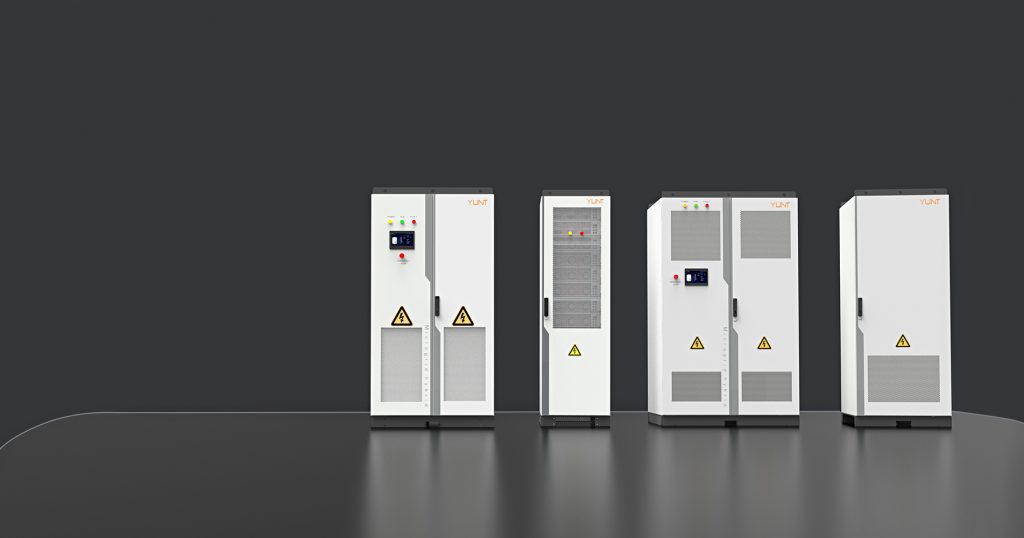
YUNT sits at that intersection — practical design, verified testing, and field-proven hardware—YUNT. —